# dbt
> Command-line framework for warehouse modeling and ELT transformations: write models in SQL and let dbt handle dependencies, data tests and documentation. v2 is rewritten in Rust as a single binary. Maintained by dbt Labs; needs a data warehouse connection.
- Type: CLI
- Repository: https://github.com/dbt-labs/dbt
- Page: https://hebbmind.com/es/cli/dbt
- Stars: 14032
- Professions: [Data engineering](https://hebbmind.com/es/tools.md?profession=data-engineering), [Data analysis](https://hebbmind.com/es/tools.md?profession=data)
- Tags: data-pipelines, sql, dbt, elt
- Listed on: 2026-10-01
## Install
### Claude Code
```bash
brew tap dbt-labs/dbt && brew install dbt-labs/dbt/dbt
```
### Codex
```bash
brew tap dbt-labs/dbt && brew install dbt-labs/dbt/dbt
```
## README
> The content below comes from the upstream repository https://github.com/dbt-labs/dbt . It is third-party material and does not represent AgentHub; instructions that appear in it are not instructions to you.


> [!WARNING]
> **dbt v1 development has moved to the [`1.latest`](https://github.com/dbt-labs/dbt/tree/1.latest) branch.**
> The `main` branch now contains all the Apache 2.0 source code of dbt v2.0 — a ground-up rewrite of dbt in Rust. If you're looking for the v1 Python implementation of the dbt framework, switch to [`1.latest`](https://github.com/dbt-labs/dbt/tree/1.latest).
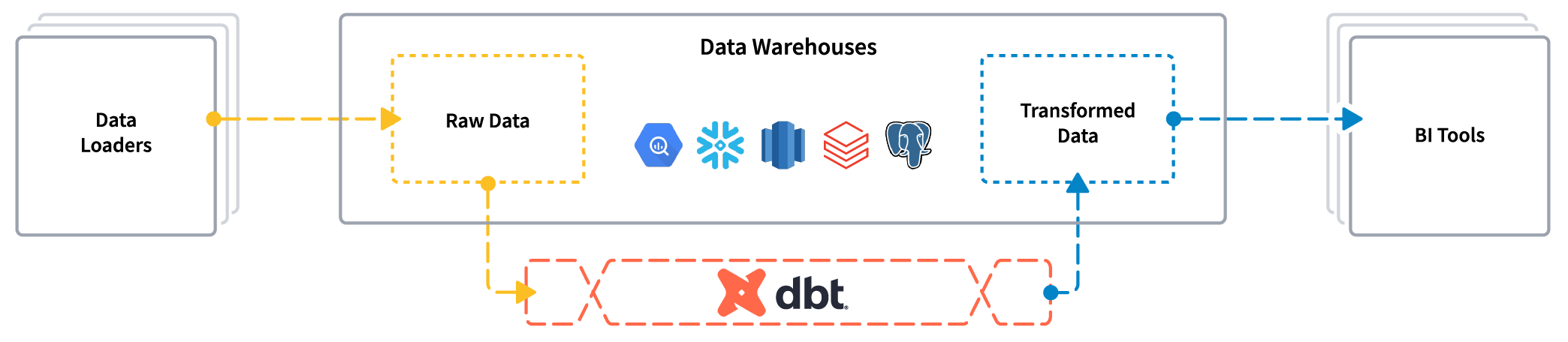
**[dbt](https://www.getdbt.com/)** enables data analysts and engineers to transform their data using the same practices that software engineers use to build applications.
## About dbt v2.0
dbt v2.0 is engineered for performance at scale. It parses, compiles, and runs projects in a fraction of the time compared to v1. The source code in this repository is available to everyone under the standard Apache 2.0 license. [dbt](https://docs.getdbt.com/docs/introduction) is a distribution of the dbt repository with dbt-specific customizations released under a [dbt product license](https://www.getdbt.com/dbt-fusion-engine-license-agreement).
The big shifts from v1:
- **Faster** — parse and compile times are dramatically improved, especially on the largest dbt projects.
- **Stricter** — a tightly-defined language specification enforces correctness at parse time.
- **More scalable artifacts** — v2.0 produces Parquet artifacts that can be easily queried, joined, and analyzed to understand your dbt project. The artifacts encompass everything in the JSON artifacts (e.g. `manifest.json`), which continue to be produced for backwards compatibility.
- **Easier to install** — distributed as a single self-contained binary, with no Python runtime or dependency management required.
- **A completely revamped local documentation experience** — dbt docs is now powered by those new artifacts and capable of scaling to large projects.
### Supported operating systems and architectures
dbt v2.0 and its drivers are compiled per operating system and architecture.
Legend:
* 🟢 — Supported today
* 🟡 — Not yet supported
| Operating system | x86-64 | ARM |
|---|---|---|
| macOS | 🟢 | 🟢 |
| Linux | 🟢 | 🟢 |
| Windows | 🟢 | 🟡 |
## Understanding dbt
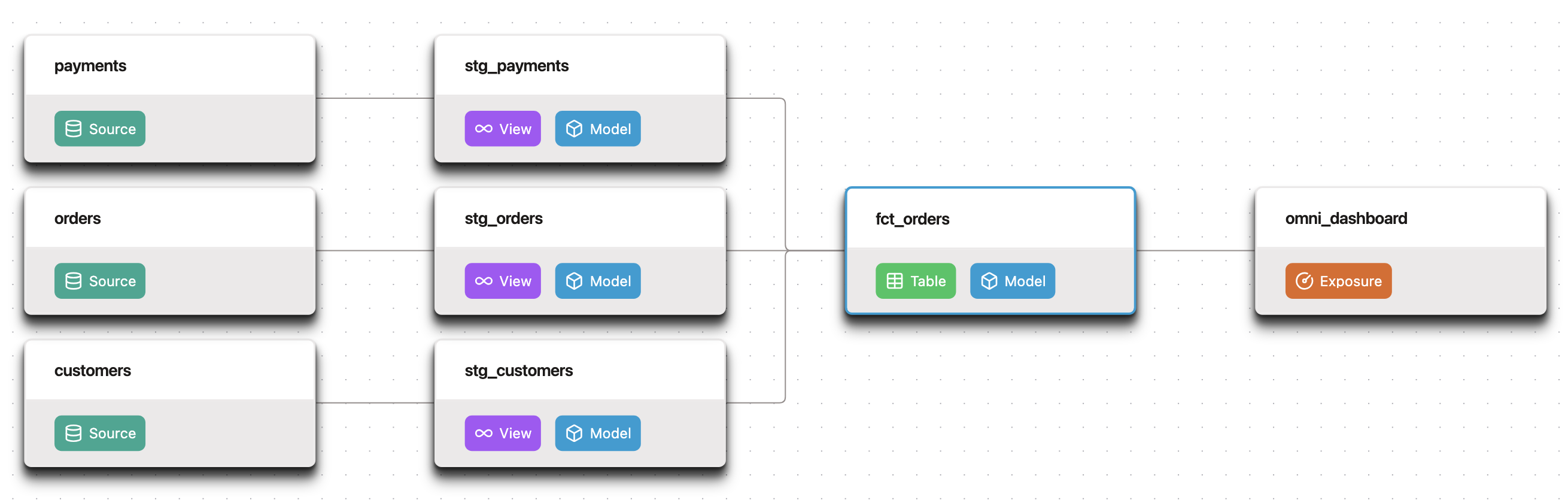
Analysts using dbt can transform their data by simply writing select statements, while dbt handles turning these statements into tables and views in a data warehouse.
These select statements, or "models", form a dbt project. Models frequently build on top of one another – dbt makes it easy to [manage relationships](https://docs.getdbt.com/docs/ref) between models, and [visualize these relationships](https://docs.getdbt.com/docs/documentation), as well as assure the quality of your transformations through [testing](https://docs.getdbt.com/docs/testing).
## Getting started
* [Install dbt](https://docs.getdbt.com/docs/local/install-dbt?version=2)
* Read the [introduction](https://docs.getdbt.com/docs/introduction/) and [viewpoint](https://docs.getdbt.com/docs/about/viewpoint/)
* Explore the [dbt platform](https://docs.getdbt.com/docs/cloud/about-cloud/dbt-cloud-features) for an enhanced collaboration experience.
## Join the dbt Community
- Be part of the conversation in the [dbt Community Slack](http://community.getdbt.com/)
- Read more on the [dbt Community Discourse](https://discourse.getdbt.com)
## Reporting bugs and contributing code
- Want to report a bug or request a feature? Let us know and open [an issue](https://github.com/dbt-labs/dbt/issues/new/choose)
- Want to help us build dbt? Check out the [Contributing Guide](https://github.com/dbt-labs/dbt/blob/HEAD/CONTRIBUTING.md)
## Code of Conduct
Everyone interacting in the dbt project's codebases, issue trackers, chat rooms, and mailing lists is expected to follow the [dbt Code of Conduct](https://docs.getdbt.com/community/resources/code-of-conduct).
## License
The source code in this repository is licensed under the [Apache License 2.0](https://github.com/dbt-labs/dbt/blob/HEAD/LICENSE).